


- Home
- Destination
- Akhal
- Geokdepe
Explore The Geokdepe With Us
Geokdepe Fortress – A Testament to Resistance and Resilience
Historical Significance: The Battle That Shaped Turkmenistan
Located 45 kilometers northwest of Ashgabat, Geokdepe Fortress stands as a somber symbol of Turkmen resistance against imperial expansion. Built in 1869, this massive mudbrick stronghold (walls 5.5 meters high and up to 9 meters thick) became the site of the 1880–1881 Battle of Geokdepe, a pivotal clash between the Turkmen Teke tribes and the Russian Empire. Under General Mikhail Skobelev, dubbed “Old Bloody Eyes” for his ruthless tactics, Russian forces besieged the fortress for 23 days. In a brutal climax, they detonated 1,160 kg of dynamite beneath its walls, breaching the defenses and massacring thousands of defenders and civilians. The fall of Geokdepe marked Turkmenistan’s annexation into the Russian Empire, altering Central Asia’s geopolitical landscape.
A Legacy of Sacrifice
The battle remains etched in national memory as a heroic last stand. Despite being outgunned—25,000 Turkmen defenders faced Skobelev’s 7,000 troops and 60 artillery units—the fortress’s fall catalyzed Turkmen identity. Today, it is revered as a symbol of courage, with annual commemorations honoring those who perished.
Present-Day Significance: Commemoration and Culture
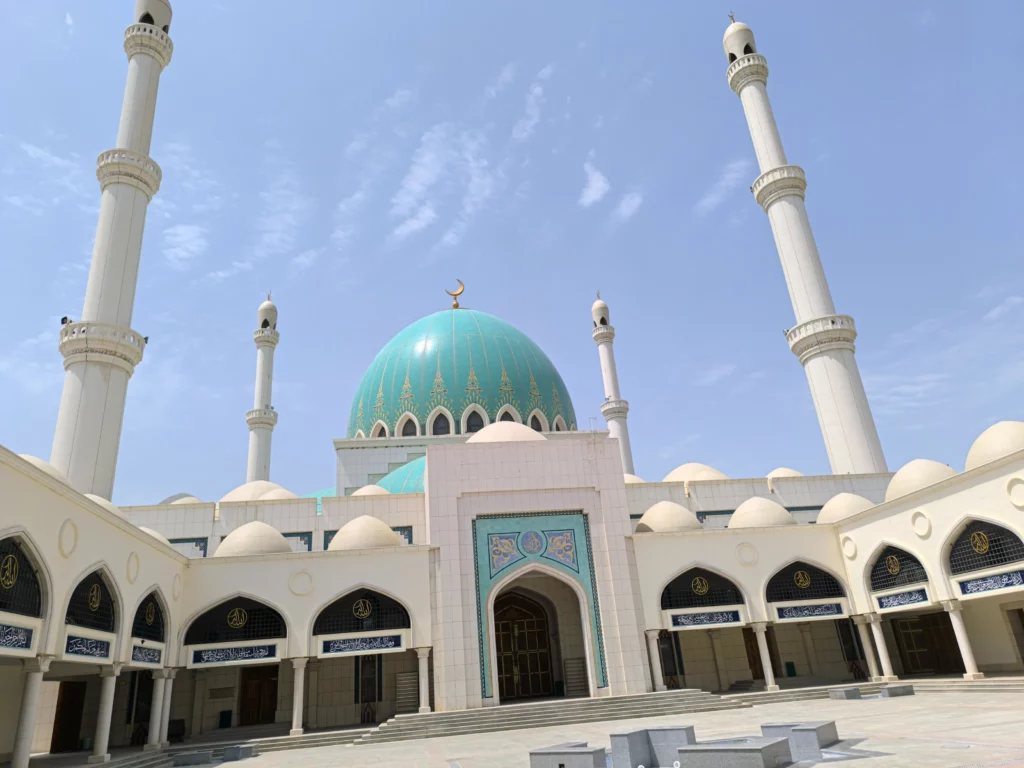
1. Saparmyrat Haji Mosque:
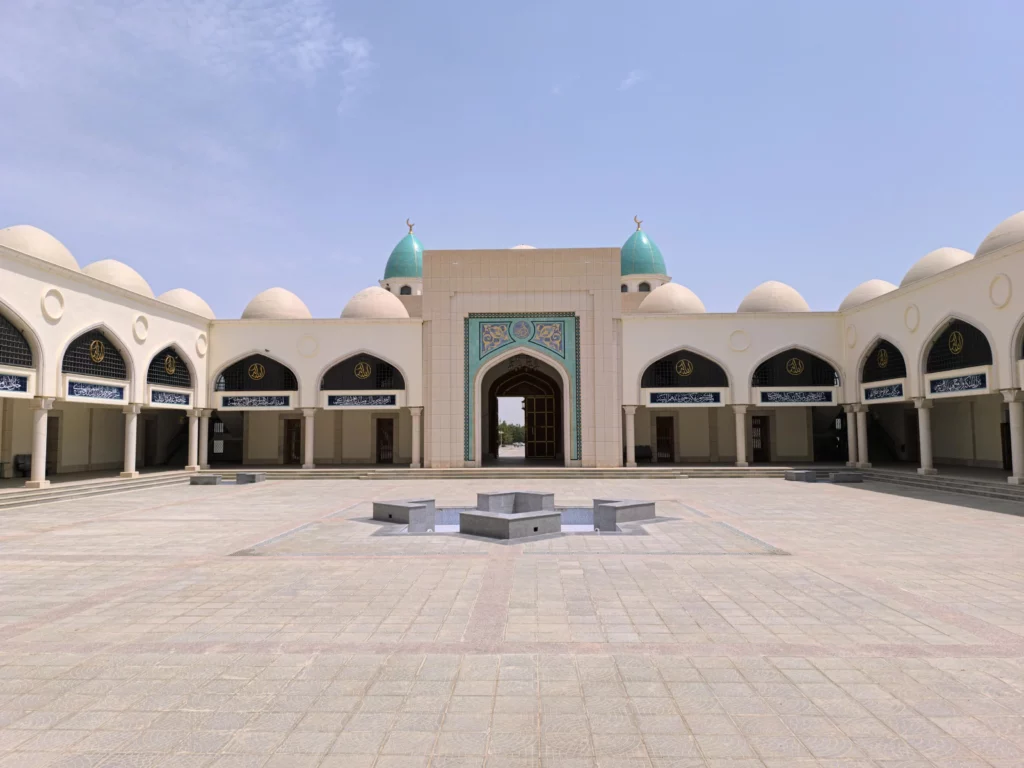
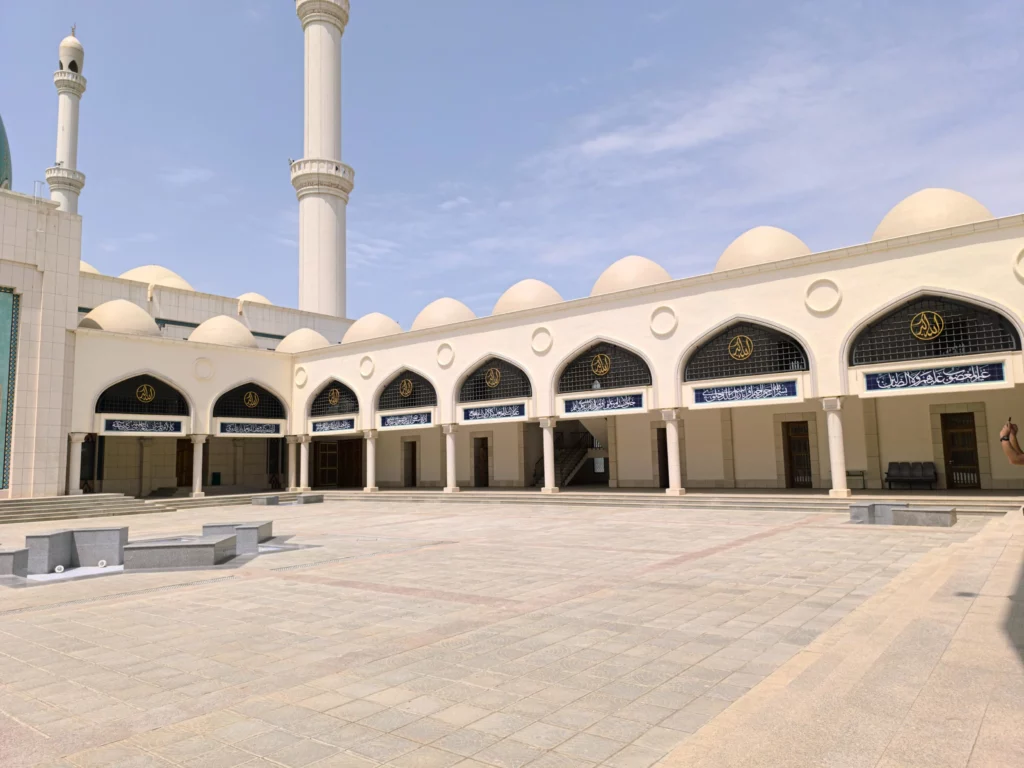
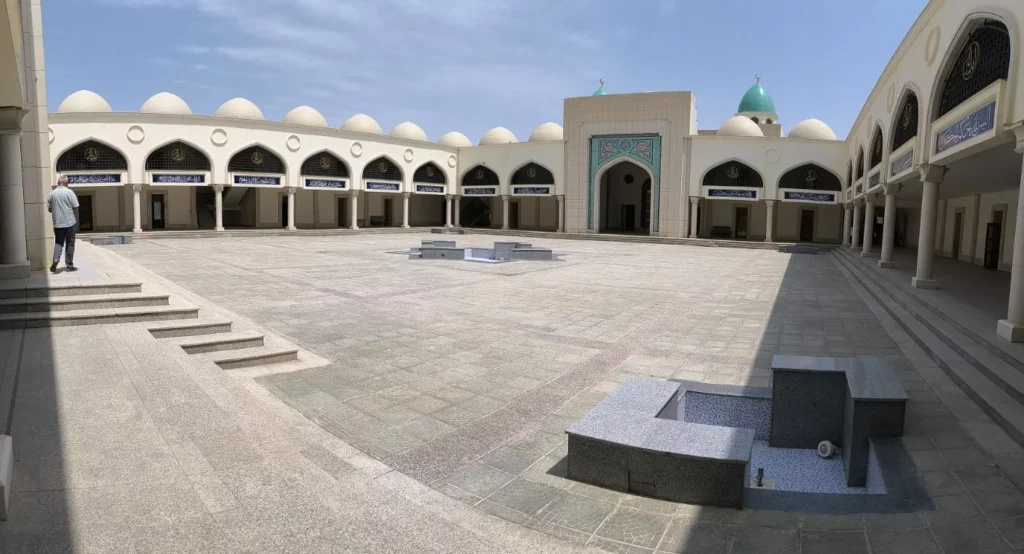
Built in 1995–1996 to memorialize the defenders, this striking mosque features four 63-meter minarets (symbolizing the Prophet Muhammad’s age at death) and a sky-blue dome. It accommodates 8,000 worshippers and serves as a spiritual hub, blending Islamic architecture with national pride.
2. Geokdepe Museum:
Adjacent to the mosque, this three-story museum chronicles Turkmen heritage through 1,500+ artifacts, including:
– Battle relics: weapons, archival photos, and maps of the siege.
– Ethnographic exhibits: traditional jewelry, textiles, and ceramics.
– Cultural displays: Insights into the Teke tribe’s life and the Akhal-Teke oasis’s history.
The museum also hosts conferences and educational programs, preserving Turkmen identity for future generations.
3. Fortress Ruins:
The remnants of Geokdepe’s walls and the crater from the 1881 explosion offer a visceral connection to the past. Visitors can walk the grounds where Skobelev’s forces stormed the breach, reflecting on the human cost of empire.
Visitor Experience
Location:
Easily accessible from Ashgabat, ideal for a half-day trip.
Guided Tours:
Local guides provide poignant narratives of the battle and its aftermath.
Best Time to Visit:
Spring (March–May) or autumn (September–November) for mild weather.
Why Visit?
Historical Insight:
Grasp the battle’s impact on Turkmenistan’s path to sovereignty.
Archural Contrast:
Marvel at the mosque’s modern grandeur against the fortress’s ancient ruins.
Cultural Reflection:
Engage with exhibits that celebrate Turkmen resilience and artistry.
Geokdepe is more than a historical site—it’s a narrative of defiance and remembrance. The fortress ruins, mosque, and museum together weave a story of loss, pride, and cultural endurance. For travelers, it offers a profound lesson in the scars of colonialism and the unyielding spirit of a nation.
Pro Tip
Pair your visit with the National Museum of Turkmenistan in Ashgabat to contextualize Geokdepe within broader Central Asian history. As the sun sets over the mosque’s blue domes, consider how this site bridges past sorrow and present reverence—a cornerstone of Turkmen identity.
OUR VISION
At “Stan Holidays”, we envision a world where travelers can discover the beauty and diversity of Central Asia while fostering mutual understanding and respect between cultures. We strive to be the leading travel agency in Turkmenistan, known for our exceptional service, deep local knowledge, and dedication to creating meaningful travel experiences.
Join us at “Stan Holidays” and let us take you on a journey through Turkmen wonders. Whether it’s your first visit or a return trip, we promise an adventure that will stay with you forever.