


- Home
- Destination
- Lebap
- Amul fortress
Explore The Amul fortress With Us

Amul Fortress: A Silent Sentinel of the Silk Road in Turkmenistan
Nestled on the outskirts of Turkmenabat, the bustling capital of Lebap Province, the ancient Amul Fortress stands as a weathered yet majestic testament to Turkmenistan’s Silk Road legacy. Once a thriving administrative and cultural hub along the Amu Darya River, this archaeological gem invites modern travelers to step into a world where caravans, conquerors, and scholars once converged.
Historical Backdrop: From Silk Road Crossroads to Timurid Stronghold
Amul’s origins trace back over two millennia, emerging as a vital node on the Great Silk Road. Strategically positioned near a key crossing point on the Amu Darya (known in antiquity as the Oxus River), it served as a linchpin for trade between Persia, Central Asia, and beyond. The fortress-city’s name, Amul (or Amuya in early texts), remains shrouded in mystery, though historical records distinguish it from its Iranian namesake by labeling it Amul-Jaykhuna (“Amul of the River”) or Amul of the Desert. By the 15th century, it adopted the Turkic name Chardjuy (“Four Channels”), a nod to its intricate irrigation systems.
Amul’s fortunes waxed and waned with empires:
Mongol Invasion: Like many Central Asian cities, Amul faced destruction during the 13th-century Mongol campaigns, lying abandoned before reviving in the 14th century.
Timurid Era: Under Timurid rule, the fortress regained military and economic prominence, its walls reinforced to guard the Amu Darya frontier.
Architectural Marvels: Walls, Wells, and Whispers of the Past
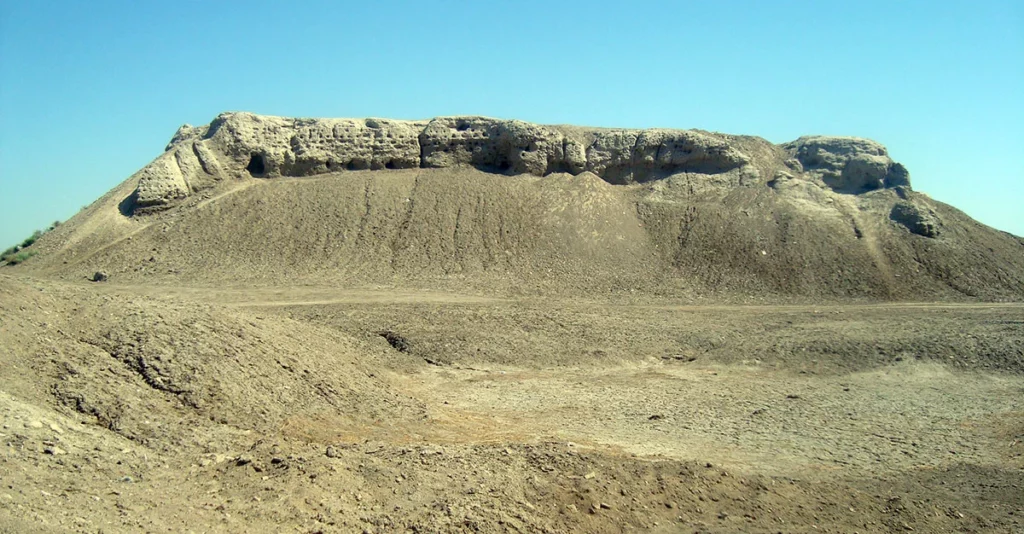
The fortress’s imposing shahristan (walled citadel) forms a near-perfect quadrangle spanning 9 hectares, its pakhsa (clay-and-straw) walls rising 21–24 meters above the surrounding plains. The northwestern corner houses the Ark, a trapezoidal citadel towering 33 meters high, once guarded by five fortified towers. Key features include:
Gates & Defenses: Four cardinal gates, vigilantly monitored by sarabaz warriors, controlled access to the citadel. A water-filled moat encircled the structure, deterring invaders.
Inner Layout: Within the walls lay a bustling square, barracks, food warehouses, and the opulent palace of the local bek (ruler), complete with lush gardens. A grim prison well—a deep, stone-lined pit—hints at the fortress’s darker history.
Surrounding Settlements: Beyond the citadel, merchants and artisans thrived in rabad (suburbs), their workshops fueling Silk Road commerce.
Today, the ruins evoke a haunting beauty, with eroded walls and sweeping views across the Amu Darya basin. While 19th-century renovations are visible, much of the site retains its medieval character, offering a raw, unfiltered glimpse into the past.
Cultural Resonance and Pilgrimage
Amul’s legacy extends beyond trade and warfare. Nearby, the Atamurat city-museum complex showcases the Alamberdar and Astana-Baba mausoleums, sacred pilgrimage sites adorned with intricate brickwork. These 10th–11th-century structures honor Sufi saints and reflect the region’s spiritual heritage, drawing believers and history enthusiasts alike.
Visitor Experience: Practical Insights
Location: 10 km southwest of Turkmenabat’s city center, en route to the Amu Darya bridges linking Uzbekistan.
Accessibility: Reachable by car or guided tour; roads are paved but signage is minimal. Local guides (arranged in Turkmenabat) provide invaluable context.
Best Time to Visit: Spring (March–May) or autumn (September–November) to avoid summer heat (45°C+) or winter chill.
Nearby Attractions: Pair your visit with the Turkmenabat Bazaar for spices and textiles, or the Repetek Biosphere Reserve for desert landscapes.
Preservation and Challenges
While Amul lacks the polished restoration of Turkmenistan’s UNESCO sites like Merv, its rugged authenticity is its charm. Conservation efforts are sporadic, but the fortress’s inclusion in state tourism campaigns signals growing recognition. Visitors should tread carefully—erosion and weathering threaten the fragile clay structures.
Why Amul Matters
Amul Fortress is more than ruins; it’s a portal to an era when the Amu Darya’s waters carried the wealth of empires. For history buffs, it offers a tangible connection to Silk Road splendor and Timurid ambition. For adventurers, its stark beauty and untamed aura evoke the romance of exploration.
Bring water, sun protection, and a vivid imagination. As the wind whispers through the ancient walls, you’ll almost hear the echoes of camel caravans and clashing swords—a timeless reminder of Central Asia’s enduring allure. 🏰🐫
OUR VISION
At “Stan Holidays”, we envision a world where travelers can discover the beauty and diversity of Central Asia while fostering mutual understanding and respect between cultures. We strive to be the leading travel agency in Turkmenistan, known for our exceptional service, deep local knowledge, and dedication to creating meaningful travel experiences.
Join us at “Stan Holidays” and let us take you on a journey through Turkmen wonders. Whether it’s your first visit or a return trip, we promise an adventure that will stay with you forever.