


- Home
- Destination
- Ashgabat
- The Turkmenbashi Ruhy
Explore The Turkmenbashi Ruhy With Us
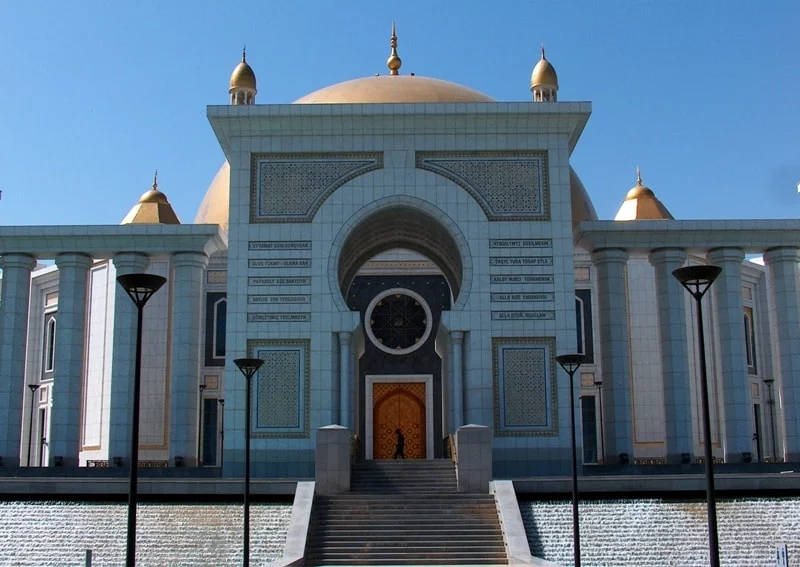
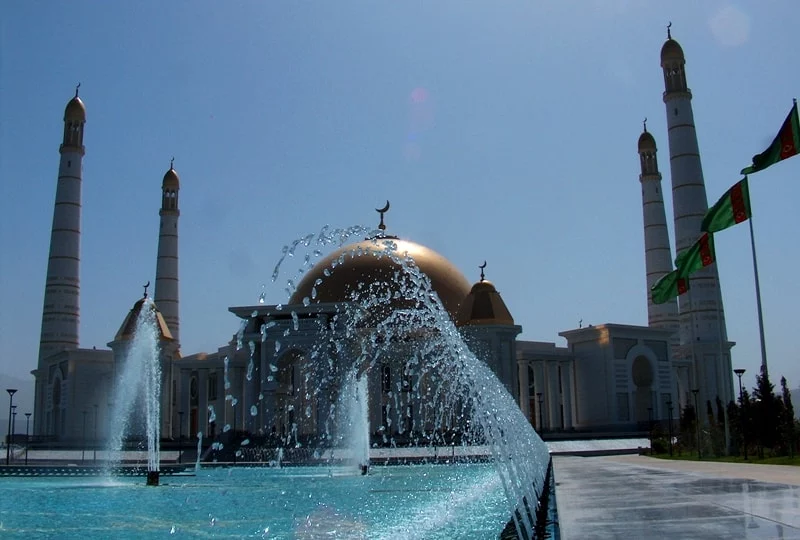
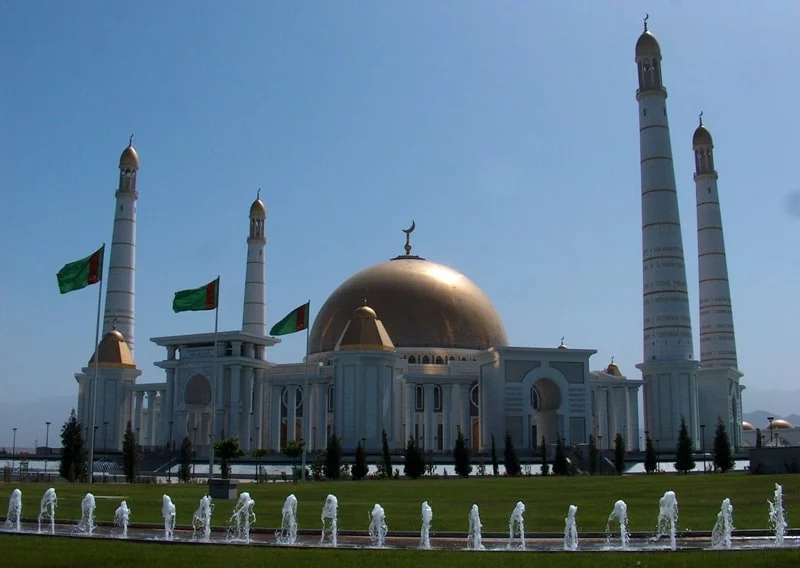
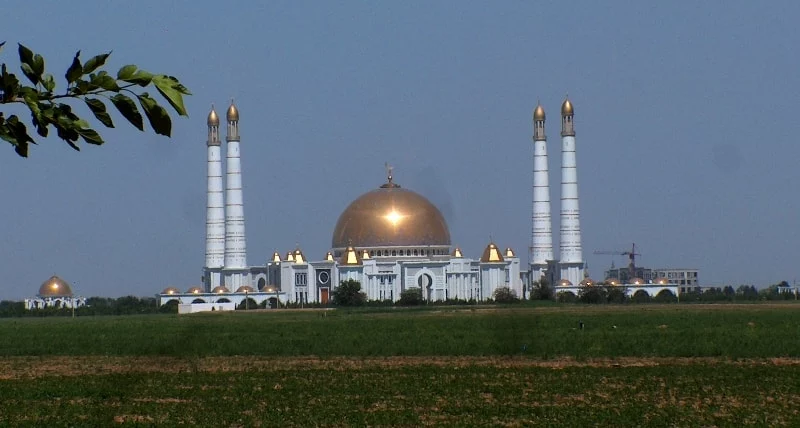
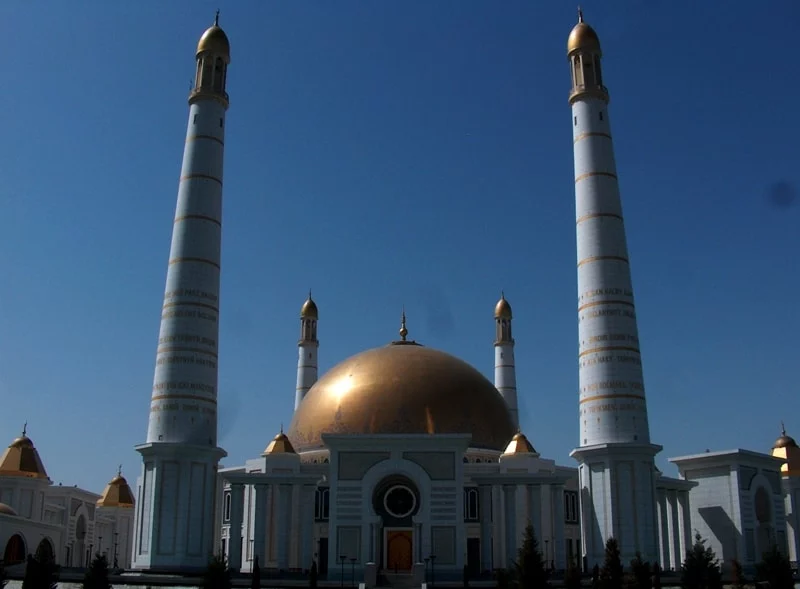
Turkmenbashi Ruhy Mosque – A Monument of Grandeur and Legacy
Rising from the arid plains of Gypjak, a village just outside Ashgabat, the Turkmenbashi Ruhy Mosque (officially the Gypjak Mosque) stands as one of Central Asia’s most extravagant religious and architectural marvels. Commissioned by Turkmenistan’s first president, Saparmurat Niyazov (Turkmenbashi), this colossal structure is not just a place of worship but a symbol of the cult of personality that defined his rule. Opened in 2004, the mosque blends Islamic tradition with Turkmen national identity—and controversy—in equal measure.
Architectural Splendor
Built at a staggering cost of over $100 million, the mosque’s design fuses classical Ottoman influences with Turkmen motifs. Its gleaming white marble façade, gilded domes, and towering four minarets (each 91 meters tall, symbolizing 1991, the year of Turkmen independence) dominate the skyline. The central dome, stretching 50 meters in diameter and adorned with verses from Niyazov’s spiritual guidebook, the Ruhnama, alongside Quranic inscriptions, reflects Turkmenbashi’s ambition to intertwine his legacy with Islamic faith.
The mosque’s capacity for 10,000 worshippers makes it one of the largest in the region. Inside, opulence reigns: the prayer hall features a 1,200-kilogram Austrian crystal chandelier, intricate gold leaf detailing, and walls inscribed with quotes from the Ruhnama. Traditional Turkmen carpets, woven by local artisans, cover the floors, while the mausoleum of Niyazov and his family lies beneath the main hall—a controversial fusion of state and spirituality.
Symbolism and Significance
The mosque’s location in Gypjak, Niyazov’s birthplace, underscores its role as a pilgrimage site for his admirers. Beyond its religious function, it serves as a monument to his authoritarian legacy. The four minarets represent Turkmenistan’s historic tribes, while the dome’s golden crescent moon symbolizes national unity. The adjacent Koranic school and family cemetery (where Niyazov’s mother and brothers are buried) reinforce the site’s dual identity as a spiritual and political nexus.
Controversy and Criticism
The mosque’s association with Niyazov’s personality cult has drawn global scrutiny. Initially, the Ruhnama—a text promoting Turkmenbashi’s philosophy—was displayed alongside the Quran, sparking backlash from Muslims who viewed this as sacrilegious. After Niyazov’s death in 2006, reports suggest the *Ruhnama*’s prominence was reduced, though its verses remain etched into the dome. Additionally, the government’s alleged enforcement of mandatory visits for public-sector workers during Niyazov’s era fueled resentment, casting a shadow over the site’s spiritual intent.
Visitor Experience
Despite its controversies, the mosque’s sheer scale and artistry leave a lasting impression. The sprawling courtyard, flanked by manicured gardens and fountains, offers tranquility, while the mausoleum’s somber elegance contrasts with the main hall’s lavishness. Visitors can explore the adjacent Turkmenbashi Museum, dedicated to Niyazov’s life, and the nearby Spiritual Mosque, a smaller replica used for daily prayers
The Turkmenbashi Ruhy Mosque is a study in contrasts: a breathtaking feat of architecture overshadowed by its political undertones, a sacred space intertwined with secular idolatry. While its grandeur captivates, the mosque’s true significance lies in its reflection of Turkmenistan’s complex modern history—a nation navigating its identity between tradition and autocratic legacy.
For travelers, it is a must-see, not only for its visual spectacle but as a window into the enigmatic soul of Turkmenistan. Just remember: here, faith and politics are carved into the same marble.
Visit to marvel at its gold-domed grandeur, but ponder the stories etched in its walls—where devotion meets the echoes of a controversial past.
Practical Info
Location:
Gypjak village, ~15 km from Ashgabat.
Dress Code:
Modest attire required; headscarves for women.
Photography:
Permitted, but respect worshippers and avoid sensitive areas.
Best Time to Visit:
Evenings for cooler temperatures and golden-hour lighting.
OUR VISION
At “Stan Holidays”, we envision a world where travelers can discover the beauty and diversity of Central Asia while fostering mutual understanding and respect between cultures. We strive to be the leading travel agency in Turkmenistan, known for our exceptional service, deep local knowledge, and dedication to creating meaningful travel experiences.
Join us at “Stan Holidays” and let us take you on a journey through Turkmen wonders. Whether it’s your first visit or a return trip, we promise an adventure that will stay with you forever.