


- Home
- Destination
- Mary
- Merv
- Mohammed ibn
Explore The Mohammed ibn-Zeid Mausoleum With Us
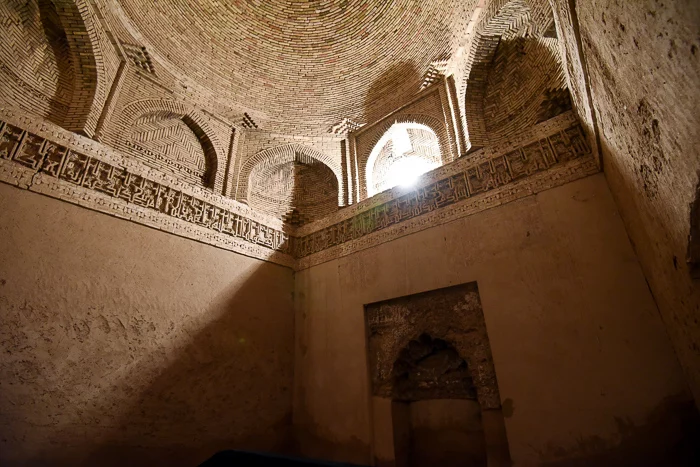
Review: The Mohammed ibn-Zeid Mausoleum – A Testament to Shiite Resilience and Seljuk Craftsmanship
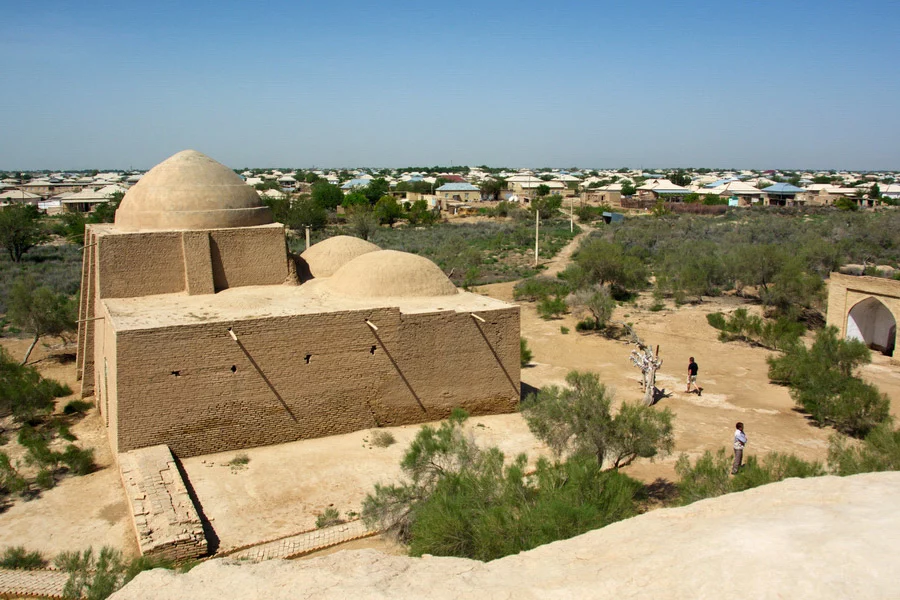
Tucked within the windswept ruins of Sultan-Kala in Merv, Turkmenistan, the Mohammed ibn-Zeid Mausoleum stands as a poignant fusion of architectural ingenuity and Shiite martyrdom. Built in 1112–1113 during the Seljuk era, this compact yet striking monument captivates visitors with its understated elegance and profound historical narrative, earning its place among the finest examples of Islamic architecture in Central Asia.
Historical Legacy: Martyrdom and Memory
The mausoleum honors Mohammed ibn-Zeid, a fifth-generation descendant of Caliph Ali and a key figure in Shiite history. In 740 CE, during the twilight of the Umayyad Caliphate, ibn-Zeid led a revolt against Sunni rule, asserting his claim to the imamate. His rebellion, though swiftly crushed, became a symbol of Shiite resistance. Captured and executed, his head was dispatched to Damascus, while his body was displayed in Kufa—a brutal warning to dissenters. Over time, a modest tomb housing his relic evolved into this revered complex, transforming ibn-Zeid into a martyr whose legacy transcends sectarian divides.
Notably, the mausoleum’s construction under the Sunni Seljuks—a dynasty otherwise known for grand Sunni projects—hints at Merv’s religious pluralism or political pragmatism, allowing Shiite veneration to flourish in this Silk Road nexus.
Architectural Brilliance: Simplicity Meets Symbolism
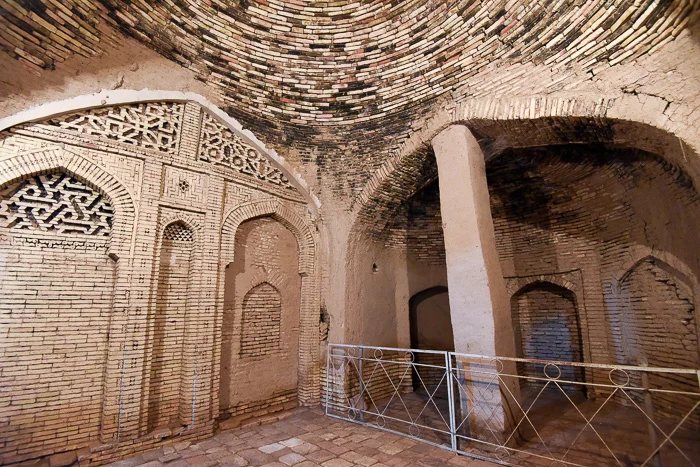
Though modest in scale, the mausoleum’s design is a masterclass in Seljuk artistry. Its burnt-brick façade is adorned with a rare Arabic inscription in angular Kufic script, declaring ibn-Zeid’s lineage and the tomb’s 12th-century origins. The bold brick lettering contrasts elegantly with delicate plaster vegetal motifs—vines and foliage symbolizing eternal life—a technique reflecting the Seljuk flair for harmonizing text and ornament.
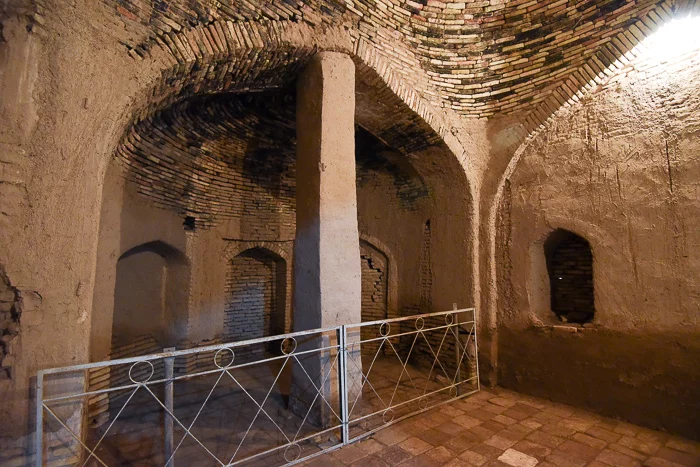
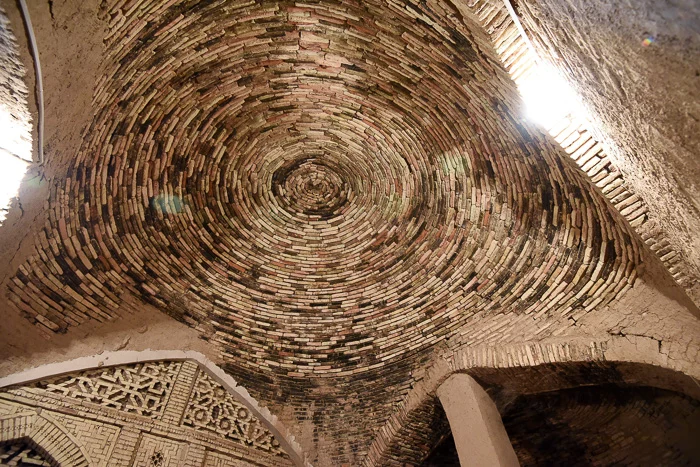
Crowning the structure are twin domes, one soaring higher than the other, a subtle nod to the sanctity of the central chamber housing ibn-Zeid’s relic. The domes’ restrained proportions and clean lines epitomize the Seljuk preference for geometric harmony over ostentation, while the interior’s intimate space invites quiet reflection.
Cultural and Spiritual Resonance
For centuries, the mausoleum has drawn Shiite pilgrims honoring ibn-Zeid’s martyrdom, underscoring Merv’s role as a crossroads of faith. Its survival through Mongol destruction and later neglect speaks to its enduring spiritual significance. Today, as part of the UNESCO-listed Ancient Merv Archaeological Park, the site also captivates historians and art enthusiasts. The inscription’s preservation offers rare insight into medieval epigraphy, while the structure’s integrity—despite partial restorations—testifies to Seljuk engineering prowess.
Visitor Experience
– Atmosphere: The mausoleum’s quiet dignity contrasts with the vastness of Sultan-Kala, offering a space for contemplation amid Merv’s sprawling ruins.
– Details to Note: Study the Kufic inscription’s craftsmanship and the interplay of light on brick and plaster patterns.
– Contextual Visit: Pair with nearby Seljuk marvels like the Sultan Sanjar Mausoleum to appreciate the era’s architectural diversity.
Practical Tips
– Guided Tours: Local experts can decode the inscription and recount ibn-Zeid’s tragic saga.
– Timing: Visit at dawn or dusk to see the bricks glow in golden light, enhancing the site’s ethereal quality.
The Mohammed ibn-Zeid Mausoleum is more than a monument—it is a narrative etched in brick and mortar. It bridges the spiritual and the political, the artistic and the historical, encapsulating Merv’s layered identity as a medieval melting pot. For travelers, it offers a rare glimpse into Shiite heritage within a Sunni-dominated empire, reminding us that even in silence, stones can speak volumes of resilience and devotion.
“In this quiet corner of Merv, the echoes of a martyr’s defiance meet the whispers of Seljuk artisans—a dialogue across centuries.”
OUR VISION
At “Stan Holidays”, we envision a world where travelers can discover the beauty and diversity of Central Asia while fostering mutual understanding and respect between cultures. We strive to be the leading travel agency in Turkmenistan, known for our exceptional service, deep local knowledge, and dedication to creating meaningful travel experiences.
Join us at “Stan Holidays” and let us take you on a journey through Turkmen wonders. Whether it’s your first visit or a return trip, we promise an adventure that will stay with you forever.