


- Home
- Destination
- Lebap
- Daya
Explore The Daya With Us
Daya-Khatyn Caravanserai: A Timeless Oasis of Silk Road Lore and Seljuk Splendor
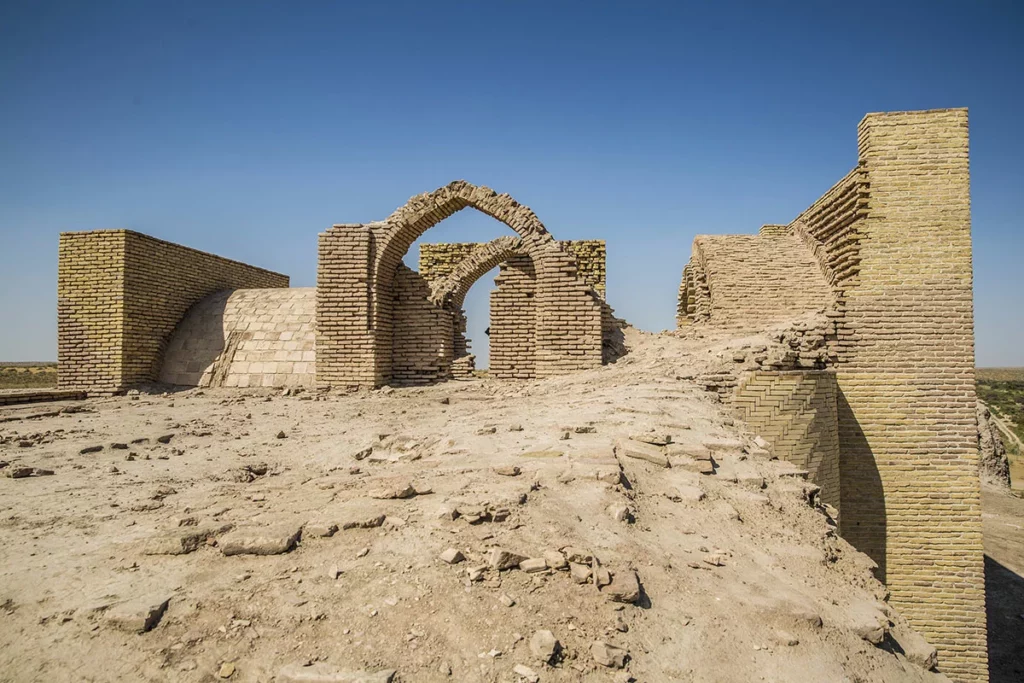
Nestled 170 kilometers northwest of Turkmenabat, near the languid flow of the Amu Darya River, the Daya-Khatyn Caravanserai (also known as Bayhatyn) stands as a hauntingly beautiful relic of Turkmenistan’s Silk Road zenith. This 11th–12th-century architectural marvel, blending fortress-like resilience with caravanserai hospitality, whispers tales of medieval traders, Seljuk artistry, and a legendary love story that has endured for centuries.
Historical Tapestry: From Tahirid Fortress to Seljuk Masterpiece
Daya-Khatyn’s origins trace to the 9th century, when it began as Ribat Tahiriya, a fortified inn commissioned by Tahir ibn al-Hussein, founder of the Tahirid dynasty, to safeguard travelers and pilgrims along the Amu Darya route. By the Seljuk era (11th–12th centuries), it was transformed into a grand caravanserai, its adobe bones clad in intricate fired-brick facades—a hallmark of Seljuk architectural patronage.
Strategically positioned on the trade artery linking Amul (modern Turkmenabat) to Khorezm, Daya-Khatyn thrived as a hub for merchants, scholars, and dervishes. Its walls bore witness to camel caravans laden with spices, silk, and ideas, while Kufic inscriptions honoring caliphs Abu Bakr, Omar, and Ali adorned its façade, reflecting the spiritual undercurrents of the age.
Architectural Grandeur: Where Form Meets Function
The caravanserai’s design epitomizes utilitarian elegance:
– Layout: A vast rectangular compound (112 × 125 meters) with corner towers, encircling a central 53 × 53-meter courtyard flanked by terraces for lodging and stables.
– Materials: Adobe brick core reinforced with fired-brick cladding, showcasing geometric patterns and Quranic inscriptions.
– Defensive Ingenuity: The original 9th-century ribat walls, later integrated into the Seljuk structure, featured arrow slits and watchtowers, merging commerce with security.
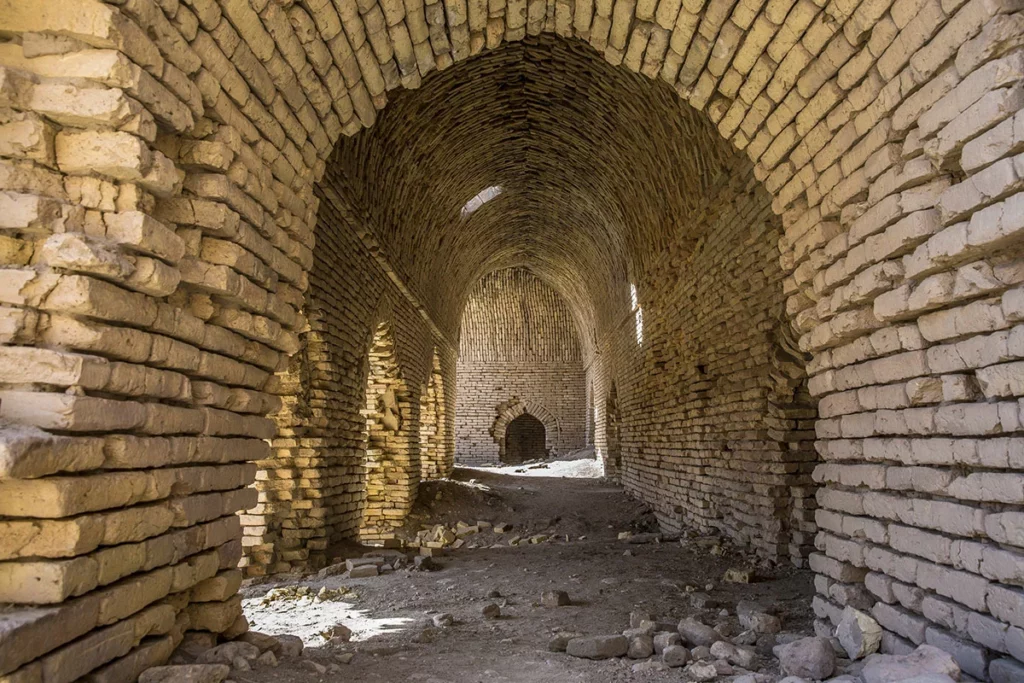
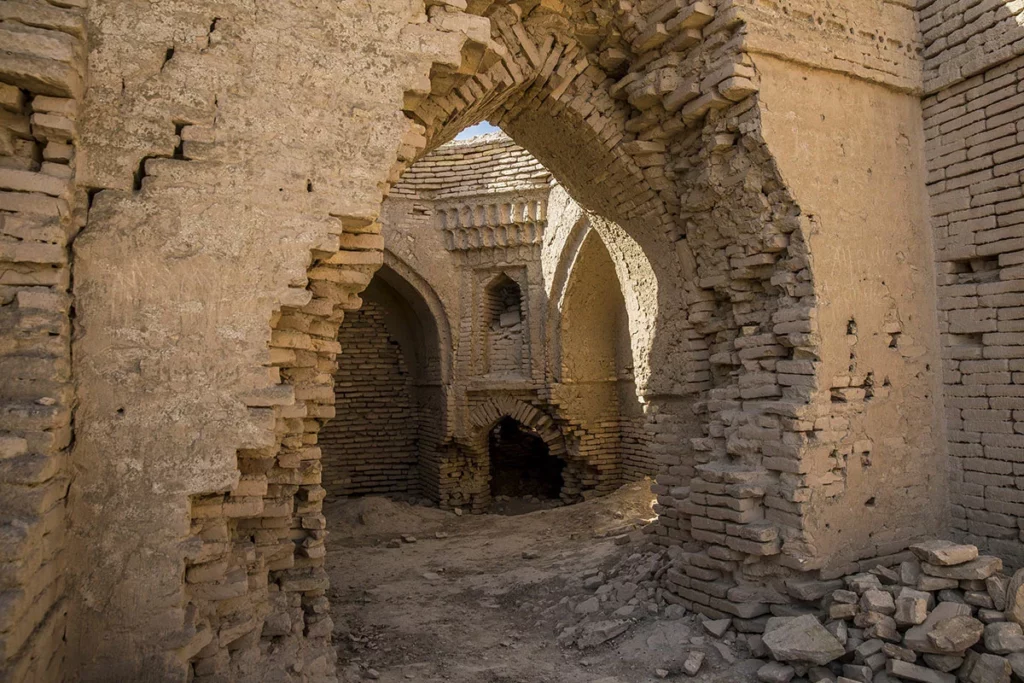
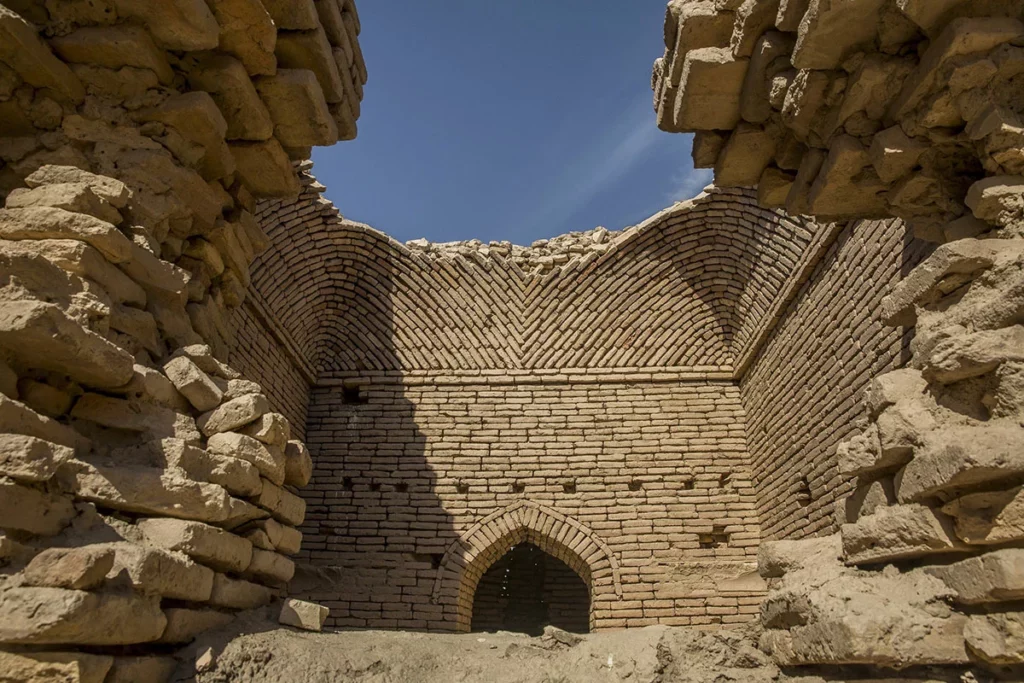
Though time has eroded much, remnants of vaulted arches, domed chambers, and the eastern portal—rebuilt during later restorations—hint at its former grandeur. The courtyard, once bustling with barter and banter, now echoes with the whispers of history.
The Legend of Bayhatyn: Love, Betrayal, and Redemption
Local lore paints Daya-Khatyn as a monument to devotion. As the tale goes:
A wealthy man, misled by slander, accused his wife Bayhatyn of infidelity and fled as a wandering dervish. Heartbroken yet resolute, Bayhatyn commissioned the caravanserai to ease travelers’ hardships. Unbeknownst to her, her husband labored among the builders. Upon completion, a feast revealed her unwavering fidelity, reuniting the couple.
This legend, immortalized in Turkmen oral tradition, underscores the caravanserai’s role as a sanctuary of hope—a motif echoed in its enduring walls.
Modern Exploration: A Journey Through Ruins
Current State: Daya-Khatyn lies in atmospheric ruin, its skeletal walls and crumbling towers offering a raw, unfiltered glimpse into the past. While erosion and neglect have taken their toll, the site’s stark beauty and historical resonance remain intact.
Visitor Experience
– Accessibility: Reaching Daya-Khatyn requires a 3–4 hour drive from Turkmenabat, often via rugged roads. A 4×4 vehicle and local guide are recommended.
– Nearby Attractions: Pair your visit with the Astana-Baba Mausoleum Complex (40 km east) or the Repetek Biosphere Reserve, famed for its desert ecosystems.
– Best Time to Visit: Spring (March–May) or autumn (September–November) to avoid extreme heat or winter chill.
Why Daya-Khatyn Matters
Daya-Khatyn is more than a relic—it’s a testament to the Silk Road’s interplay of commerce, culture, and human connection. Unlike the polished restorations of Samarkand or Bukhara, its rugged authenticity offers a visceral link to the past. For historians, it’s a case study in Seljuk-Tahirid synthesis; for romantics, a ode to enduring love.
Bring a flashlight to explore shadowed alcoves and imagine the clatter of hooves on cobblestones. As the sun sets, the bricks glow amber, casting long shadows that dance with the ghosts of traders and storytellers.
In a region steeped in grandeur, Daya-Khatyn stands apart—a silent sentinel of Turkmenistan’s forgotten highways, waiting to share its secrets with those willing to listen. 🐫🏰
OUR VISION
At “Stan Holidays”, we envision a world where travelers can discover the beauty and diversity of Central Asia while fostering mutual understanding and respect between cultures. We strive to be the leading travel agency in Turkmenistan, known for our exceptional service, deep local knowledge, and dedication to creating meaningful travel experiences.
Join us at “Stan Holidays” and let us take you on a journey through Turkmen wonders. Whether it’s your first visit or a return trip, we promise an adventure that will stay with you forever.