


- Home
- Destination
- Lebap
- Dinosaur Plateau
Explore The Dinosaur Plateau With Us
KUGITANG STATE RESERVE
The reserve was established in 1989 on an area of 27,140 hectares to protect the unique mountain landscapes of the Kugitangtau ridge. In total, there are about 150 plant species, many of which are endemic. The reserve is home to 21 species of mammals (horned goat, Turkmen lynx, white-clawed bear, leopard, and bearded vulture), 143 species of birds, 21 reptiles, 2 amphibians. Archaeological and paleontological monuments are preserved – dinosaur footprints, Karlyuk and Kap-Kutan caves.
In the flora of the reserve, Pamir-alai species predominate, and 872 species, including other species, are found to be growing here, and 10% of them are endemic species only (high tulips, sparrows, sparrows, etc.). There are also more than 130 species of medicinal plants used in both folk and scientific medicine. Among the valuable plants, plants such as Glegiagi’s cleomeus, Nikiti’s asparagus, high tulip, and Victor’s giraffe were included in the second edition of the Red Data Book of Turkmenistan.
The reserve includes three Garlyk, Hojapil and Hojaburjy High Landscape Reserves with a total area of about 90,000 ha. The multifaceted Garlyk Reserve (40,000 ha) includes the southern slope of Kugitang and the mountainous areas up to the Amu Darya. It protects the world-famous Garlyk karst cave group, the underwater lakes inhabited by blind fish from the hot-water Gainarbaba spring, and deep and beautiful valleys such as Sinjir, Kettek, Abdere, Bulakdere.
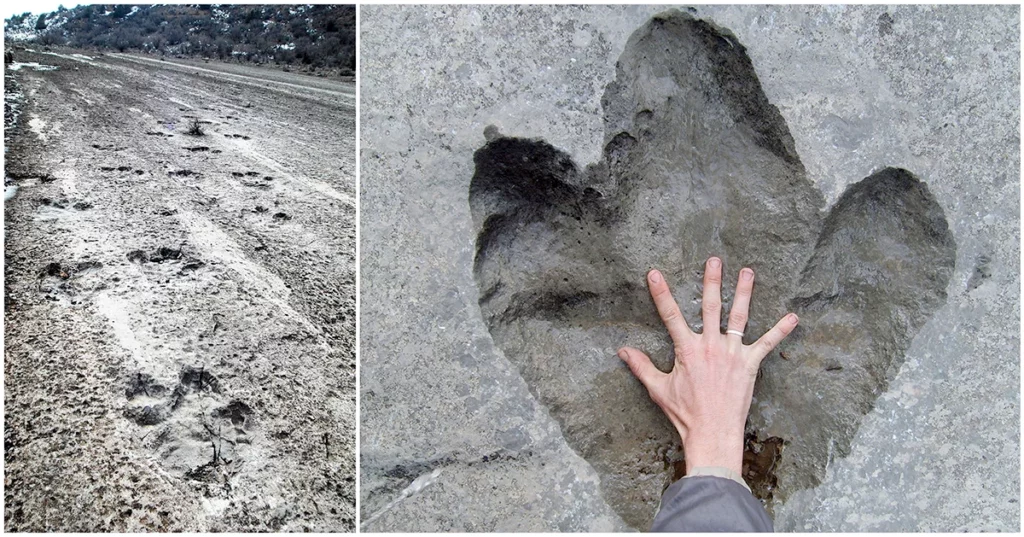
The Hojapil Landscape – Paleontological Reserve (31.6 thousand ha) includes the northern part of the Kugitang that is not included in the reserve, the upper belt of the Kugitang Valley and the northeast of the Govurdak Low Mountain. It is home to the Dinosaur Plateau, which has preserved footprints of dragons that died about 150 million years ago.
The Hojaburjy High Landscape Reserve (17.6 thousand ha) is located northwest of the village of Kugitang and includes the Sakyrtma, Hojaburjy, Tahtatag ridges. It is home to the famous Pistachio Forest (1.5 thousand ha) and the foothills of the mountain.
FOOTPRINTS OF DINOSAURS
Another of the great attractions of Koytendag is the remains of dinosaurs. The traces were found in the north-western slope of Koytendag in the 1980s near the village of Hojapil. The dinosaur’s footprints are flat, 500 meters long and 260 meters wide, with more than 400 footprints. According to Professor W. I. Sedlesky, these traces are footprints of plant-eating iguanodons and predatory dinosaurs that lived about 150 million years ago. So many of them have been found only in Turkmenistan and nowhere else (for the first time the remains of dinosaurs were found in the United States, then in Mongolia and China).
The Plateau is located in Turkmenistan’s eastern corner on the border with Afghanistan and Uzbekistan in Lebap region in the heart of the Koytendag National Park that is the location of Turkmenistan’s highest mountain as well as waterfalls, lakes and caves.
The Hojapil Plateau in Koytendag was home to a number of dinosaur traces that have made it famous throughout the country. More than 2,500 dinosaur traces have been found here. These traces, once found by the locals, have been thought to be traces of elephants mounted by Alexander the Great armies for centuries. That is why the village was called Hojapil. Located on the north-western slope of the mountain in 1980, these traces have been studied by scientists. The dinosaurs lived 150 million years ago, during the time of the Upper Jurassic. The image of the three fingers on the back is clearly visible. Large traces have a diameter of 70-80 cm. The distance between the steps is 1.5 m. Thus, these giants are estimated to have a height of 8-12 m, a body length of up to 5 m, and a total weight of up to 5-10 t. The small, only 45 cm long traces next to those large traces are of great scientific interest. Probably a factor as to why they are doing so poorly. The plain, which is 500 m long and more than 200 m wide, has more than 2,500 traces preserved in various forms belonging to the Upper Jurassic period. Only in our country do the traces of endangered species once discovered by Turkmen scientists surprise the whole world.
KAPKOTAN, HASHIMOYUK, GULSHIRIN CAVES
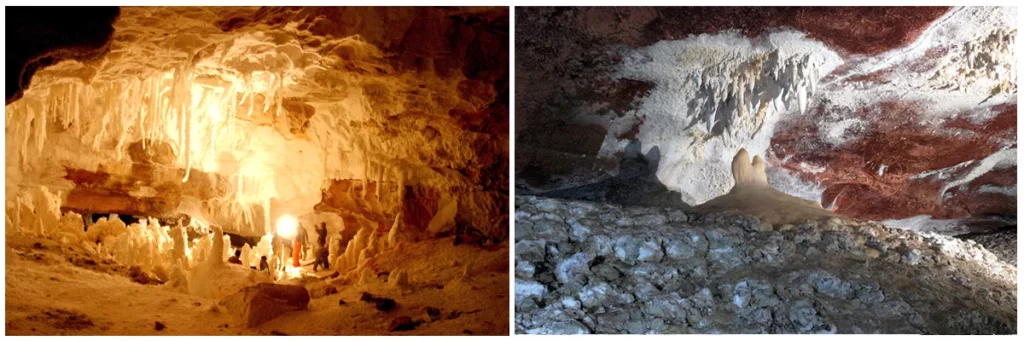
One of the main attractions of Koytendag is the Garlyk natural underground cave system, which combines the Kapkotan, Hashimoyuk, Gulshirin, Aralyk, Dashyurek, Dik (Kunstkamera) and dozens of smaller ones near the village of Garlyk. There are also smaller pools that amaze you with their beauty.
These caves are mainly composed of thick terrigenous-carbonate marine sediments of mes-koznozoic age that are water-soluble. The precipitation from the air, passing through the cracks, formed in the rocks and provided with carbonate calcium, and then hardened in a sliding form on the walls. As a result, large karst strata formed, forming beautiful natural caves that kept their secrets in their folds.
The Kapkotan Cave, 56 kilometres long among many karst strata of Koytendag, is one of the largest. This is one of the longest cave systems in the world.
Hashimoyuk Cave, which has been known since ancient times, can also be included in these natural values. Many historians speculate that the marble onyx was taken from this cave to decorate the shrine of Timur, one of the greatest rulers in world history. The cave has been protected and included in the list of UNESCO’s unique natural geological facilities.
Gulshirin Cave is famous for its beauty among the natural caves of Koytendag. It differs from the caves of the region in its decoration. This cave is located on the right bank of the valley northeast of the Hashimoyuk Cave. There are many large halls here, the domes reach a height of 50 meters, and the walls are decorated with magnificent plaster floors, crystal lamps, chrysanthemums, and other sculptures in appearance. The floors of several halls are covered with stone flowers as a result of high humidity. A number of halls and galleries are reminiscent of real dense forests made of gypsum stalactites and stalagmites.
The caves include blind beetles, fish, terrestrial and aquatic creatures, lobsters, and even wingless flies. Most of the underground creatures today are creatures that have been around for centuries, no longer encountered on earth, but who have retained the animal-like image and habits of the past millennia. That is why they are of great interest to science.
KYRKGYZ VALLEY
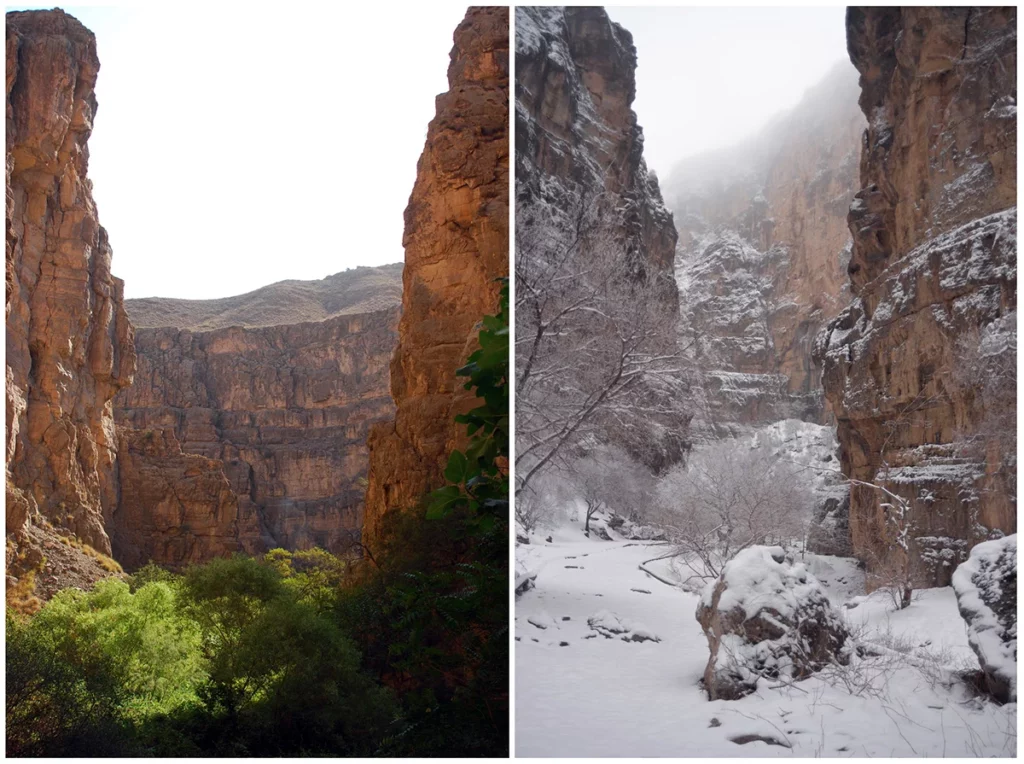
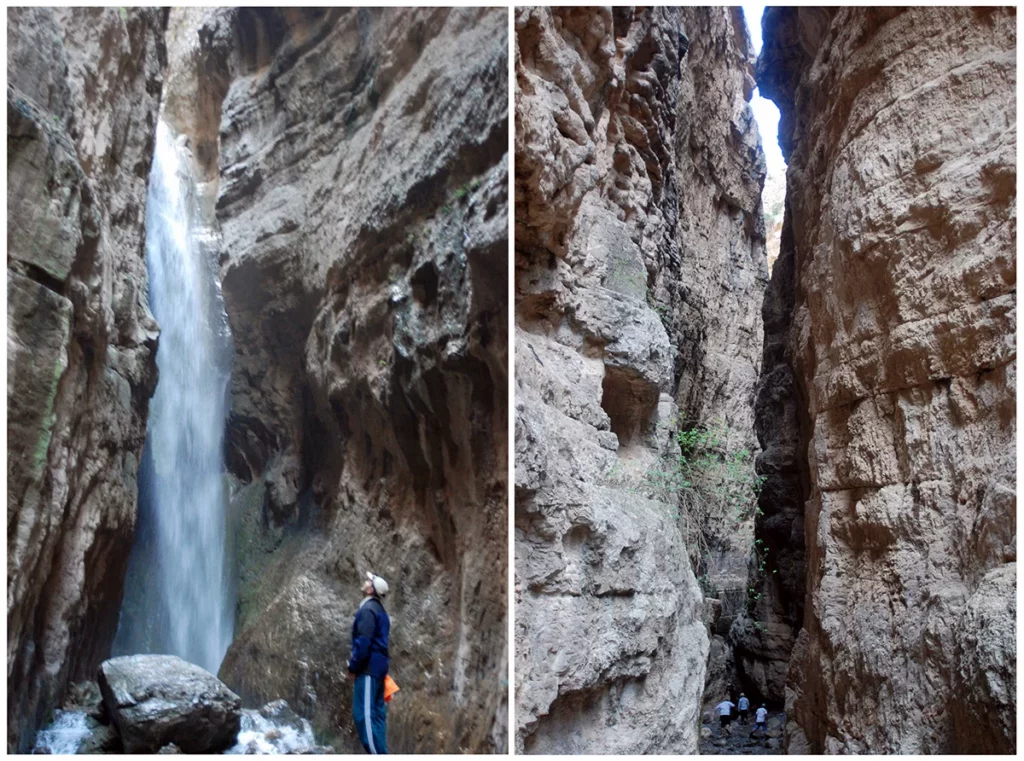
In Koytendag, near the village of Hojapil, there is a valley called Kyrkgyz within the Hojapil Limited Nature Reserve of the Koytendag State Reserve. The walls of this amazing valley are 200 meters high and the width is 15 to 300 meters. If you walk a few hundred meters in the direction of the valley, you will reach a large dome-shaped cave. It has a fountain on its right. The water of this spring is considered an ointment. The water flows in the form of a drop from above, falls on the surface like a large cauldron, and accumulating there.
There are two legends about this valley. First, it is said in ancient times there were forty beauties living near this valley. They came to the cave every day, rested, and took a dip. One day the village was attacked by the enemy, the girls were hiding, but the enemies found the place where the girls were hiding. They surround the cave, trying to catch the girls. The girls begged God not to be caught. At that moment, a miracle occurred, the rocks shifted, the passage opened, and the girls entered from there and disappeared. The rocks were closed and the girls were forever hidden from the enemies. The clothes and utensils left by the girls in the cave turned to stone. Even now, if you look closely, you will find stones reminiscent of household utensils and utensils.
The second legend says that enemies have been poured out on the people living here. The villagers, in consultation, hide the village’s daughters. Enemies took men captive and enslaved women. Girls were told, “We will send a message if we escape the enemy.” The villagers then escaped the enemy. They then sent messengers after the girls. The girls who saw the long-distance messenger, thinking that the enemy was coming, threw themselves into the cave and perished.
Forty Girl Caves is one of the largest caves, 10 meters high and more than 30 meters wide. The stone figures in the cave are similar to the sculptures of the girls.
Nowadays, people go there to visit. They make a wish, wrap the mud of this place in cloth, and throw it to the roof of the cave. It is said that if this piece of cloth clings to the roof, that person’s dream comes true.
DARAYDERE
The name of Koytendag characterizes its peculiar surface area. It is derived from the Persian words “kuhi” and the Turkish word “teng” which means “mountain that is difficult to cross”. In fact, numerous valleys and canyons surround these mountains. The longest of them is Hojachilgizbaba (28 km). The most beautiful is Daraydere with a depth of about 600 m. It is home to walnuts, grapes, Caucasus, figs, moss, and spruce. Under the trees where the sun shine does not reach, a spring of cold clear water flows throughout the year.
At the foot of the Koytendag vegetation is a belt dominated by a complex of grassy vegetation, and above it a belt of trees and shrubs, in particular a spruce juniper. On the top of the mountain, grow semi-crimson plants with thorn-shaped thorns. There are about 900 plants in the flora of the reserve, some of which are endemic. The protection of the vegetation cover, especially the summer cover, is of great importance in protecting the soil cover from the mountains from wind and water pollution.
Bazardepe village is located 25 km northeast of Garlyk village. To the southeast of the village is the Daraydere valley. It is famous for its unique natural beauty. There is also 18 kilometres long Daraydere stream takes its source from mountain.
It is part of the Khojagarawul Nature Reserve of Koytendag Nature Reserve. In addition, the Daraydere is home to a forest of walnuts, grapes, Caucasus almonds, figs, and juniper spruce. There are cool shade gardens, and a clear and abundant water source creates a comfortable environment for guests to relax. The distance can be reached to the Daraydere valley is 8 km by car. That place is called Garden number 1.
The side cliffs of this valley are 300-600 meters high and are sharp and steep as if cut with a knife. A mountain spring flowing through the valley forms about 10 large and small waterfalls. Daraydere is a bird paradise where you can find birds included in the Red Data Book of Turkmenistan. Here you can also find other twisted horned goats. Moreover, endangered species of plants and insects can be found here. Visitors come not only from Turkmenistan but also from abroad.
LAKE KETTE-KEL
There are hundreds of beautiful lakes in different parts of our planet. While some of them are pink in colour, some have high densities and do not allow diving into the inside, while others are clean and abundant with water and vary in depth. There are also many lakes that attract people with its nature and underwater beauties of the surrounding area. For this reason, lakes also have a special place among the world-famous tourist destinations.
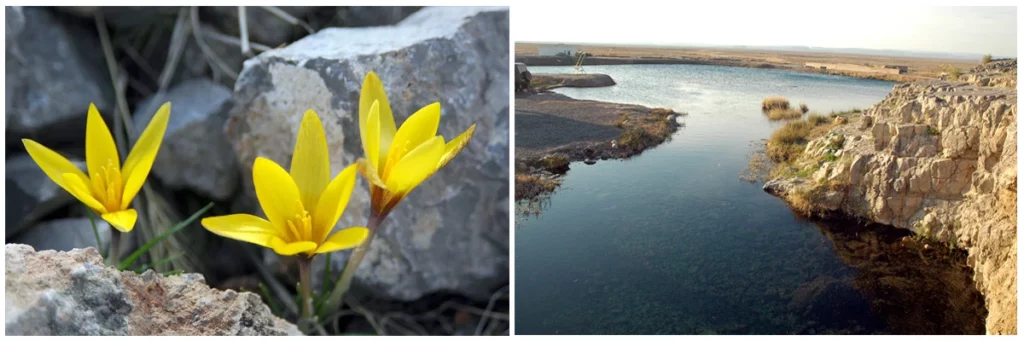
There are many lakes in Turkmenistan those attract tourists. Lake Kette-Kel, the deepest lake in Turkmenistan, has a depth of 59 meters. The lake is located in the western part, at an altitude of 737 meters above sea level, in the suburb of Köyten settlement. The mountain looks amazing when you look at it from the lake.
The lake looks more like a reservoir as there is an artificial dam in its south-western part. The lake fills with rain and snow waters from the north. The length of the lake is 466 meters and its width is 380 meters and it is located among the brown mountain hills are not so high.
Lake Kette-kel was Karst Lake on the outskirts of Koytendag. Then the people built a bowl and turned it into a pond. It is next to the “Gündogar” tourist centre. Koyten Geological Exploration Expedition is located on the shore of lake. The place is crowded during the summer months and is perfect for swimming and lake trips. The water of the lake is mainly derived from the clear, fresh water flowing from the mountain springs. Lake water is also used to irrigate agricultural crops in times of water shortage.
The beach surface is clay and loam. The area of Kette-Kel Lake is 25 hectares. The water in this lake is strongly mineralized and the locals consider it medicinal. However, the elders call the lake “Dead Lake”. The reason for that is often terrible sounds come from its depths and the water is painted red. Of course, this is due to the mineral springs at the bottom of the lake and its mineral content. However, this causes the locals to fear the lake.
Koytendag (Kugitang) Nature Reserve: Turkmenistan’s Jurassic Eden of Mysteries and Majesty
Nestled in eastern Turkmenistan’s Lebap Province, bordering Afghanistan and Uzbekistan, the Koytendag (Kugitang) State Reserve is a UNESCO-recognized wonderland of prehistoric footprints, labyrinthine caves, and dramatic valleys. Spanning 27,140 hectares, this biodiverse sanctuary—established in 1989—boasts geological marvels, endemic wildlife, and legends that blur the line between myth and reality.
A Jurassic Time Capsule: Dinosaur Plateau
At the Hojapil Paleontological Reserve, over 2,500 dinosaur footprints fossilized 150 million years ago sprawl across a 500-meter limestone slab. These tracks, left by towering iguanodons and nimble predators, are among the largest concentrations on Earth. Locals once mistook them for elephant tracks from Alexander the Great’s armies, dubbing the area *Hojapil* (“Holy Elephant”). Highlights:
– Giant Tracks: Some span 80 cm, with 1.5-meter strides, hinting at 10-ton beasts.
– Rare Parallel Trails: Small 45-cm prints alongside giants suggest parental guidance—a paleontological treasure.
Subterranean Labyrinths: Caves of Wonder
The **Garlyk Cave System**, part of the Garlyk Reserve, includes:
– Kapkotan Cave: A 56-km-long karst maze, one of the world’s longest cave networks.
– Hashimoyuk Cave: Source of marble onyx for Timur’s mausoleum, now a UNESCO-protected site.
– Gulshirin Cave: A cathedral-like chamber with 50-meter gypsum “chandeliers” and stone flowers.
– Blind Ecosystems: Unique aquatic life, including eyeless fish and wingless flies, thrive in eternal darkness.
Valleys of Myth and Majesty
Kyrkgyz Valley (Valley of 40 Girls):
– Legends: Two tales of tragedy—40 girls turned to stone to escape invaders or perishing in a cave—linger in its 200-meter cliffs.
– Rituals: Visitors toss mud-filled cloths to the cave ceiling; if it sticks, wishes are granted.
– Daraydere Canyon:
– A 600-meter-deep gorge with walnut forests, fig trees, and 10 cascading waterfalls.
– Birdwatchers’ paradise: Home to endangered species like the bearded vulture.
Lake Kette-Kel: The “Dead Lake
Turkmenistan’s deepest lake (59 meters) is shrouded in mystery:
– Mineral Waters: Red-hued from iron springs, believed to have healing properties.
– Local Lore: Eerie sounds and crimson tides fuel myths of a “cursed” lake.
– Activities: Swimming, picnics, and hikes near the *Gündogar* tourist center.
Flora and Fauna: A Biodiversity Hotspot
– Endemics: 10% of its 872 plant species, like the Victor’s giraffe flower, exist nowhere else.
– Wildlife: Snow leopards, Turkmen lynx, and horned goats roam juniper forests.
– Medicinal Plants: Over 130 species used in traditional remedies.
Practical Guide
Best Time to Visit: Spring (March–May) for wildflowers; autumn (September–November) for mild treks.
– Access:
— Base: Begin in Turkmenabat; hire a 4×4 for remote trails.
— Permits: Required for restricted zones; arrange via Turkmenistan’s State Tourism Committee.
— Stay: Camp under stars or lodge near Lake Kette-Kel.
Why Koytendag?
Koytendag is where Earth’s ancient pulse beats strongest—a realm of dinosaur ghosts, crystal caves, and valleys steeped in legend. For adventurers, it offers unrivaled hikes; for scientists, a living lab of evolution; and for dreamers, a canvas of myths etched in stone.
Pack a flashlight for caves, a camera for waterfalls, and an open mind for tales of vanished girls and thundering giants. 🌄🦖
OUR VISION
At “Stan Holidays”, we envision a world where travelers can discover the beauty and diversity of Central Asia while fostering mutual understanding and respect between cultures. We strive to be the leading travel agency in Turkmenistan, known for our exceptional service, deep local knowledge, and dedication to creating meaningful travel experiences.
Join us at “Stan Holidays” and let us take you on a journey through Turkmen wonders. Whether it’s your first visit or a return trip, we promise an adventure that will stay with you forever.