


- Home
- Destination
- Mary
- Gonur-Tepe
Explore The Gonur-Tepe With Us

Architecture of Gonur Tepe
Gonur Tepe is a capital temple city of the country Margush. Archaeologists managed to discover convincing facts of spiritual rituals and traditions proving that Gonurians believed in Zoroastriasm.
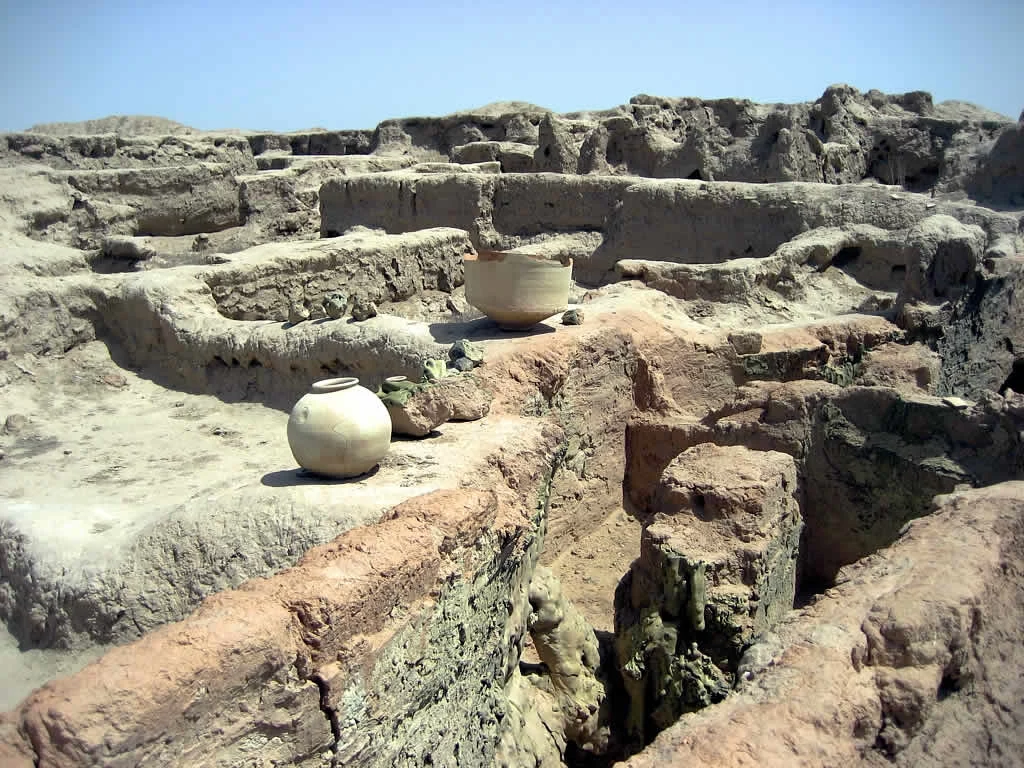
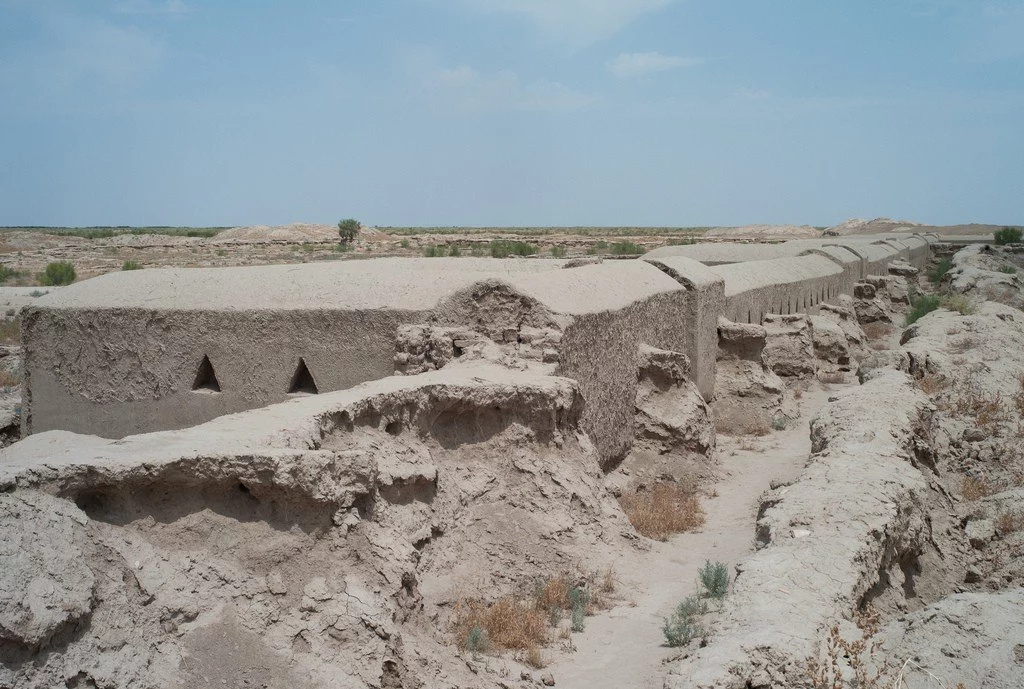
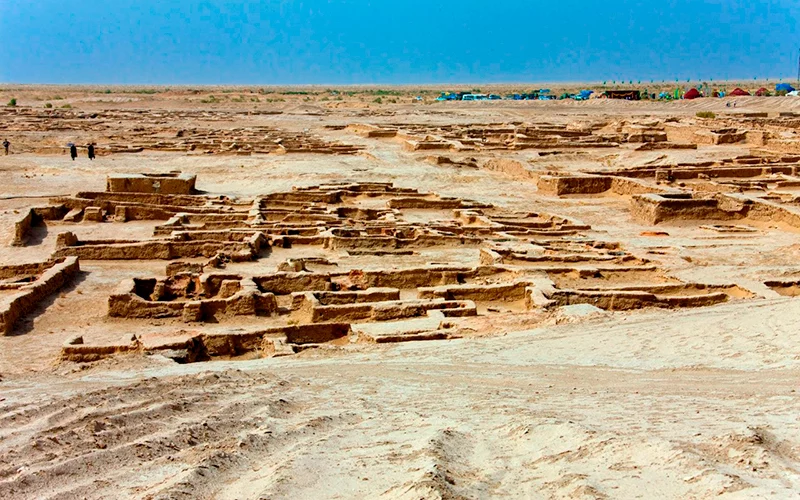
In the center of the town, there was a palace with many big rooms surrounded with strong, thick walls and few square towers. The main priest most probably resided there. Around the palace, there were temple constructions from all 4 sides connected with one wall. In the corners, the wall was fortified with square towers, but not as big in size as in the external wall of the palace.
Beyond the walls, in the southern side, there was a swimming pool, 180x80m in size and 2m deep. From the northern and western parts of the temple complex, there were other two pools but smaller in size. All these constructions were surrounded by another medium and rather narrow wall fixed with pilasters from the inner side. Scientists suppose that this wall served as a symbol of restrictor of the holy place from the other world and was erected symbolically, and not for defense purposes.
Archaeologists found fragments of the façade part of the buildings testifying that it was stone mosaic used for decoration of walls. The technique of the Gonur masters is unique: initially the image on the wall was drawn in paints and only later done with stones. Any similar technology of mosaic processing hasn’t been found in the world yet. An entire row of potteries was found on the territory of Gonur Tepe, certifying that earthenware was in high demand.
Finds in Gonur Tepe
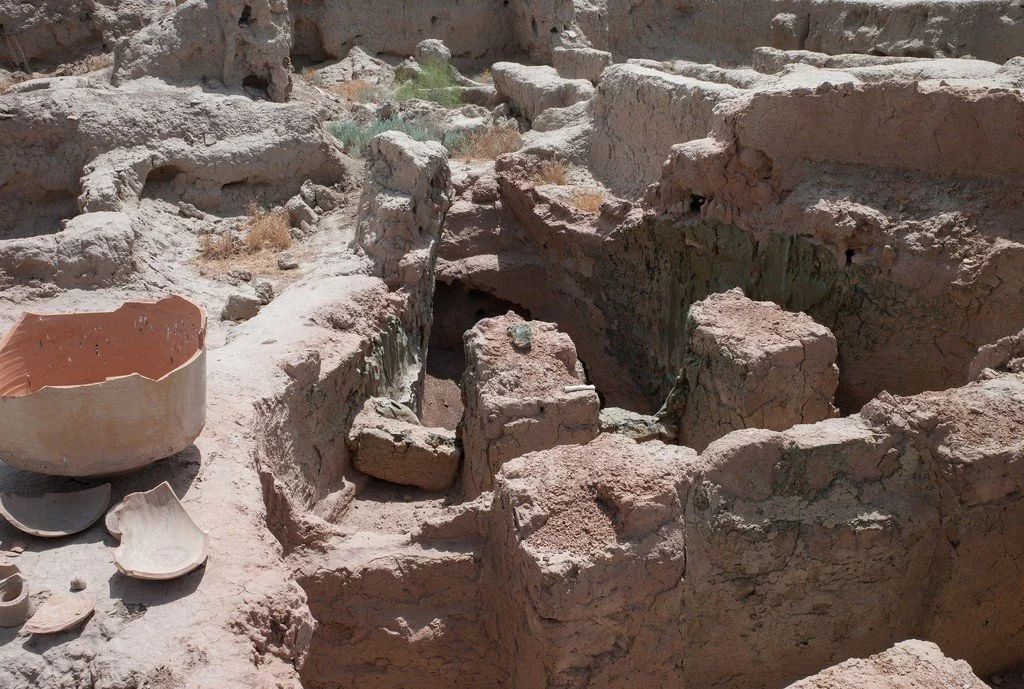
One of the most interesting discoveries is the burial underground premises found in the eastern part of the big pool. Everything there showed that this was the burial of local elites of that period. Archaeologists dug 5 tomb-vaults in total; each of them looked like a house with several rooms. Two of the tombs had burials of several people. Most probably bodies belonged to the servants, who, according to ancient customs, were supposed to escort their master to the other world. It was also according to traditions that the burial place was filled with valuable things that once belonged to the deceased.
Underground vaults were robbed already in the times when the city was inhabited. However, the archaeologists managed to find few silver and golden vessels and some jewelry pieces. Apart from the jewels, scientists discovered more fragments of mosaic compositions in the tombs. They are assumed to served as decoration of the shrines, but were damaged with the time. There were big boxes in the tombs once filled with gifts to the spirits of the other world.
Together with the burials, a foundation pit, 2.5m deep and 5m in diameter, was found not far from the tomb. This place turned out not to be robbed and archaeologists excavated there many interesting items and mortal remains of ancient people and animals there.
There was a chariot in the center of the foundation pit that obviously was thrown down. If we believe the legends of those times, the chariot was necessary for the deceased in order to transfer to the other world. There were mortal remains of seven people, seven dogs, two donkeys and two camels next to the chariot.
Number 7, corresponding to the seven deceased people and seven dogs killed in a special way as a sacrifice, was not chosen accidentally. Both ancient Zoroastrians and modern Turkmens considered digit 7 as sacred. Descendants of the ancient Gonurians still have strange attitude to dogs – they are respected and feared at the same time.
Among little items, archaeologists found a bronze lamp, two stone sticks with silver rings on its ends, a scoop, three bronze items, unique vessel that is almost one meter in height and consisting of seven ball-shape cisterns and a wide round-bottomed vessel.
Apart from the big foundation pit, there were found smaller burials, as well as some unusual things that scientists cannot give a clear explanation to. For instance, in one of the tombs, they discovered few stones done into smooth and even balls next to the ceramic dishes, and some pistachio shaped stones. It is still unknown what these items were made for and the role they carried out.
Necropolis of Gonur Tepe still holds many mysteries for historians, archaeologists and scientists. This place is one of the important touristic objects of Turkmenistan, visited by thousands of tourists every year. Discover this wonderful and mysterious sight to touch the secrets of Turkmens’ ancestors who were great and talented sculptors, builders and jewelers of the past.
Review of Gonur-Tepe: A Glimpse into Ancient Margiana
Gonur-Tepe, located in the eastern Karakum Desert of Turkmenistan, is one of the most fascinating archaeological discoveries of the late 20th century. Unearthed in the 1990s, this ancient site dates back to the 3rd-2nd millennia B.C. and offers a captivating window into the civilization of Margiana, a region that once rivaled the grandeur of Assyria and Babylon. Known as the “Grey Hill” in Turkmen, Gonur-Tepe is a testament to the advanced culture, spirituality, and craftsmanship of its inhabitants.
Historical Significance
Gonur-Tepe is believed to have been the capital of the ancient country of Margush (Margiana). Unlike traditional cities ruled by kings, Gonur-Tepe was governed by a spiritual leader—a supreme priest—who commanded respect through faith rather than force. This unique governance structure highlights the deeply religious nature of the society, which is further evidenced by the discovery of Zoroastrian rituals and traditions. The city’s layout, with its central palace, temples, and sacred pools, reflects its role as a spiritual and cultural hub.
Architectural Marvels
The architecture of Gonur-Tepe is both impressive and enigmatic. At its heart lies a grand palace surrounded by thick walls and square towers, likely the residence of the high priest. The palace is encircled by temple complexes, all connected by a fortified wall with smaller towers at the corners. Beyond these walls, the discovery of large swimming pools—one measuring 180×80 meters and 2 meters deep—suggests their use in religious or ceremonial activities. These pools, along with the surrounding walls, were likely symbolic, separating the sacred from the profane.
One of the most remarkable aspects of Gonur-Tepe’s architecture is its stone mosaic decoration. The technique used by Gonur artisans was unparalleled: they first painted images on walls and then meticulously recreated them with stones. This unique method has no known parallels in the ancient world, showcasing the artistic ingenuity of the Gonurians.
Archaeological Finds
The excavations at Gonur-Tepe have yielded a treasure trove of artifacts that shed light on the lives and beliefs of its inhabitants. Among the most significant discoveries are the underground burial vaults in the eastern part of the large pool. These tombs, resembling multi-room houses, contained the remains of elites and their servants, who were likely sacrificed to accompany their masters into the afterlife. Although many tombs were looted in antiquity, archaeologists have uncovered silver and gold vessels, jewelry, and fragments of mosaic decorations that once adorned shrines.
A particularly intriguing find is a 2.5-meter-deep foundation pit containing a chariot, believed to have been used by the deceased to journey to the other world. The pit also held the remains of seven humans, seven dogs, two donkeys, and two camels—a clear nod to the sacred significance of the number seven in Zoroastrian and Turkmen traditions. Other artifacts, such as a bronze lamp, stone sticks with silver rings, and a unique seven-ball-shaped vessel, further illustrate the sophistication of Gonur-Tepe’s craftsmanship.
Mysteries and Unanswered Questions
Despite the wealth of discoveries, Gonur-Tepe remains shrouded in mystery. The purpose of certain artifacts, such as smooth stone balls and pistachio-shaped stones found in tombs, is still unknown. The full extent of the city’s area is also unclear, with estimates ranging between 30 to 50 hectares. Ongoing excavations continue to reveal new insights, but many questions about the daily lives, beliefs, and ultimate fate of the Gonurians remain unanswered.
Tourism and Cultural Heritage
Today, Gonur-Tepe stands as one of Turkmenistan’s most important cultural and historical sites. Thousands of tourists visit annually to marvel at its ancient ruins and ponder the secrets of a civilization that thrived over 4,000 years ago. The site offers a unique opportunity to connect with the ancestors of modern Turkmens, who were master builders, sculptors, and jewelers.
Conclusion
Gonur-Tepe is more than just an archaeological site; it is a portal to a forgotten world. Its discovery has reshaped our understanding of Central Asia’s ancient history, revealing a society that was spiritually profound, artistically advanced, and culturally rich. For anyone interested in archaeology, history, or the mysteries of human civilization, Gonur-Tepe is a must-visit destination. Its enduring enigmas and breathtaking discoveries ensure that it will continue to captivate scholars and travelers for generations to come.
OUR VISION
At “Stan Holidays”, we envision a world where travelers can discover the beauty and diversity of Central Asia while fostering mutual understanding and respect between cultures. We strive to be the leading travel agency in Turkmenistan, known for our exceptional service, deep local knowledge, and dedication to creating meaningful travel experiences.
Join us at “Stan Holidays” and let us take you on a journey through Turkmen wonders. Whether it’s your first visit or a return trip, we promise an adventure that will stay with you forever.